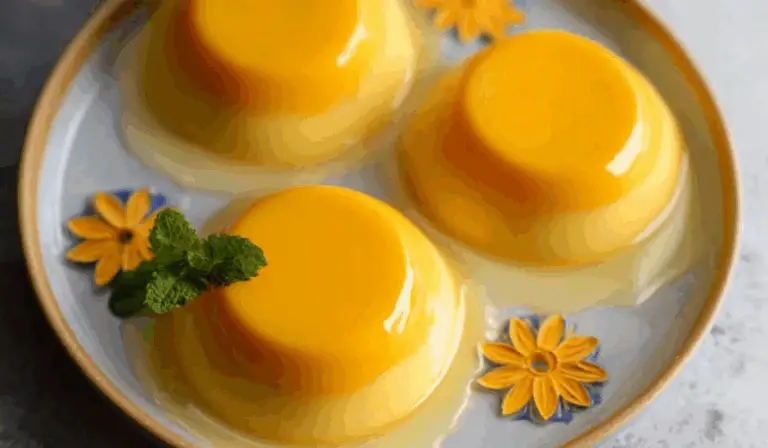
Ingredients
You’ll need the following:
-
2 medium ripe mangoes (about 340g or 12 oz): Choose Ataulfo or Champagne mangoes for natural sweetness and smooth texture
-
½ cup full-fat coconut milk: Provides the pudding with richness and a mild tropical flavor
-
Substitution: You can also use evaporated milk or heavy cream if preferred
-
-
2 tablespoons cold water: Used for blooming gelatin or agar
-
1½ teaspoons gelatin powder: The standard setting agent in most traditional versions
-
Vegan option: Substitute with 1½ teaspoons agar-agar powder
-
-
1½ tablespoons white granulated sugar: Adjust according to the sweetness of your mangoes
-
Optional garnishes
-
Diced mango pieces
-
Extra coconut milk or cream drizzle
-
Mint leaves for a pop of green
-
Preparation Notes
-
Peel and dice mangoes in advance. Save a few cubes for garnish if you wish.
-
For the setting agent, gelatin must be bloomed in cold water; agar needs to be boiled to activate.
Instructions
Step 1: Prepare the Mangoes
-
Wash the mangoes and pat them dry.
-
Peel off the skin and cut the flesh away from the seed.
-
Dice the mango flesh roughly and place it in a blender or food processor.
-
Blend until completely smooth — aim for a puree without any lumps.
-
Tip: Straining the puree can remove stringy fibers for an extra silky texture.
-
Step 2: Bloom the Gelatin (or Agar-Agar)
-
In a small bowl, combine 1½ teaspoons of gelatin powder with 2 tablespoons of cold water.
-
Stir gently and let it sit for 5 minutes — this is called “blooming,” and it’s essential for proper setting.
-
If using agar-agar: Mix the agar with the water and prepare to boil it in the next step.
-
Step 3: Mix Coconut Milk, Sugar, and Mango Puree
-
In a mixing bowl, whisk together:
-
The mango puree
-
Coconut milk
-
Sugar
-
-
Stir until the sugar is fully dissolved and everything is combined evenly. This forms the flavor base of your pudding.
Step 4: Warm the Mixture Gently
-
Pour the entire mixture into a small saucepan and place over medium-low heat.
-
Add the bloomed gelatin or agar-agar into the pan.
-
Stir continuously using a whisk. This prevents clumping and ensures everything melts properly.
-
Heat for about 4–5 minutes until the mixture is hot but not boiling.
-
Gelatin loses its power if overheated, so keep it just warm.
-
If using agar: You must bring it to a gentle boil to activate it, then simmer for 1–2 minutes before removing from heat.
-
Step 5: Strain (Optional but Recommended)
-
For an ultra-smooth pudding, pour the heated mixture through a fine mesh sieve into another bowl or jug.
-
This helps remove mango fibers or any clumped gelatin, leaving a glossy finish.
Step 6: Pour and Chill
-
Divide the mixture into 4 small glass cups, ramekins, or bowls.
-
Let them cool slightly before covering with plastic wrap.
-
Refrigerate for at least 4 hours, or until fully set.
-
The texture should be firm but creamy when touched with a spoon.
-
Step 7: Garnish and Serve
-
Once fully chilled, garnish each pudding with:
-
Extra diced mango
-
A drizzle of coconut milk or cream
-
A mint leaf for color contrast
-
Notes
-
Choose ripe mangoes: Mango is the star. The sweeter and more aromatic your mangoes, the better your pudding will taste. Avoid unripe or fibrous mangoes.
-
Don’t skip blooming: Gelatin must be bloomed before heating or it won’t dissolve properly. Skipping this step leads to a grainy or unset pudding.
-
Gentle heat is key: Overheating can damage gelatin’s setting ability. On the other hand, agar requires a boil to work. Always adjust the heat based on which setting agent you’re using.
-
Strain for elegance: It’s a small step but makes a big difference in mouthfeel. Removing fibers leads to a smoother, more professional finish.
-
Customize the texture: Prefer a firmer bite? Use an extra ½ teaspoon of gelatin or agar. Like it extra creamy? Reduce slightly or add more coconut milk.
-
Don’t freeze: Chilling is essential, but freezing will break down the structure of the pudding and cause it to weep when thawed.
- Prep Time: 15 minutes
- Cook Time: 5 minutes