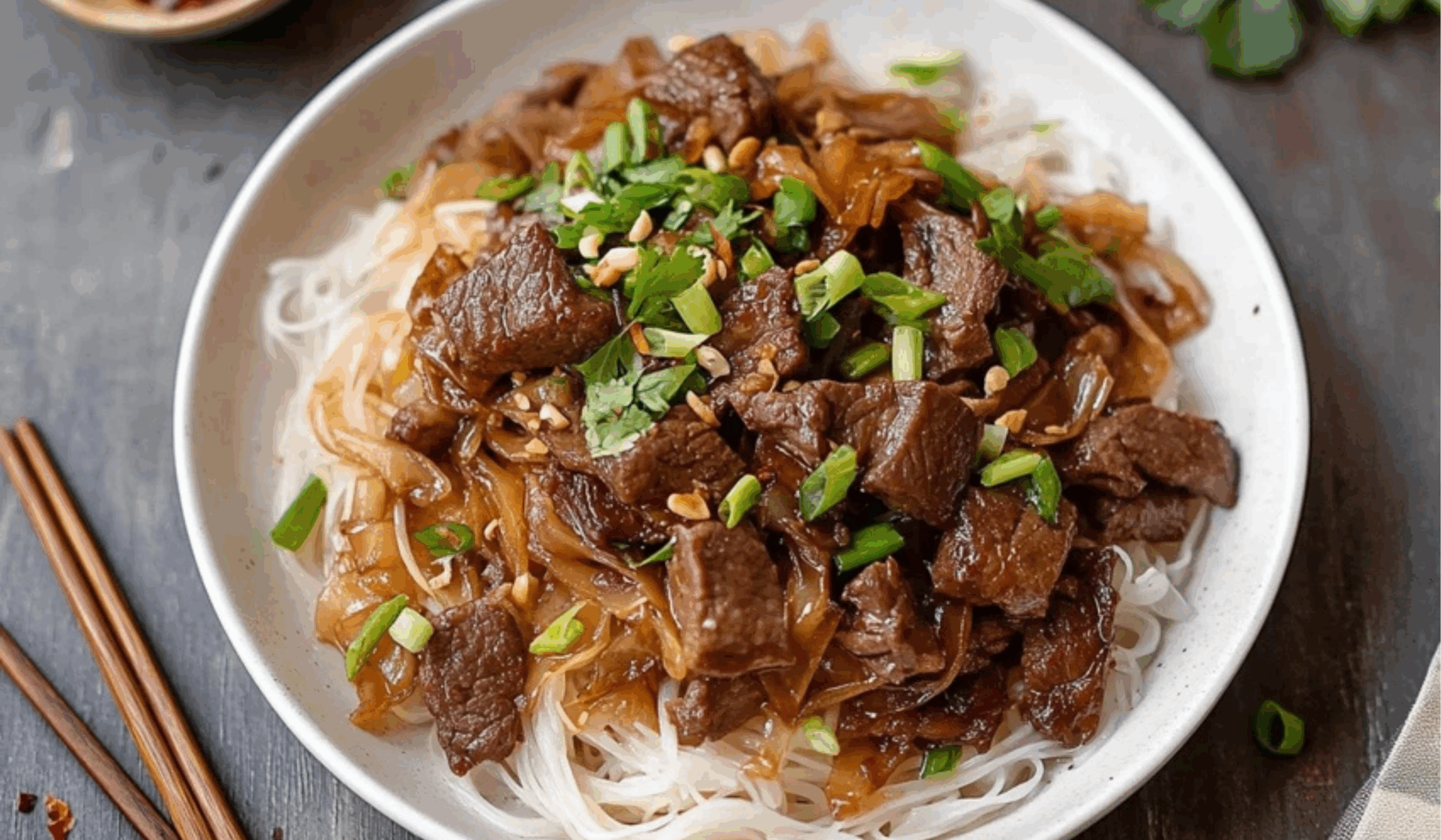
Hu Tieu Ap Chao is a vibrant Vietnamese stir-fried noodle dish that combines soft and crispy textures with bold savory flavors. Traditionally made with pork or seafood, this recipe reimagines the classic by substituting beef—creating a hearty, satisfying version that’s rich in flavor but still balanced and light.
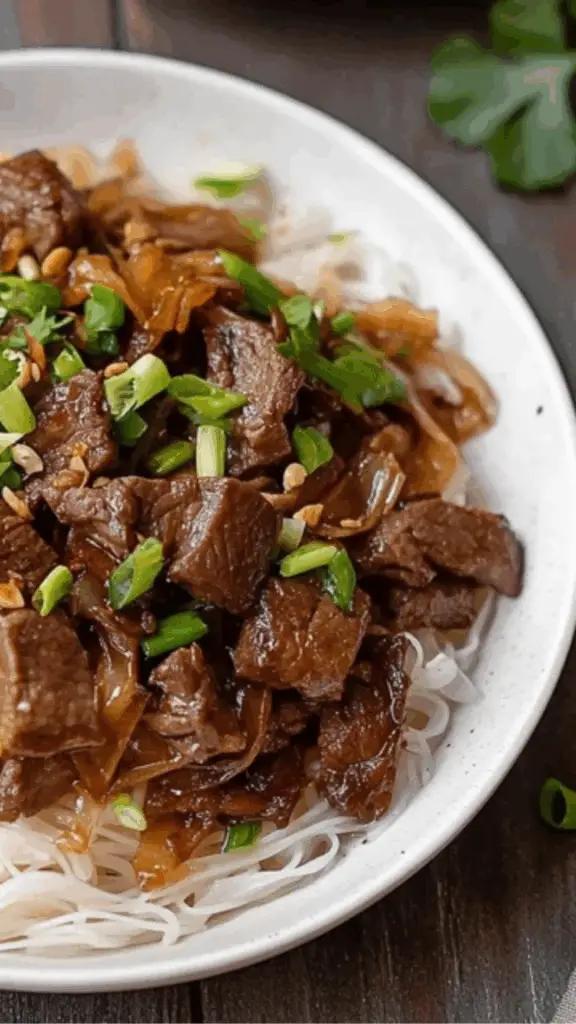
Vietnamese cuisine is known for its delicate balance of salty, sweet, sour, and umami, and Hu Tieu Ap Chao is a perfect example. Stir-fried flat rice noodles are pan-seared for a crispy edge, tossed with marinated beef and blanched vegetables, and finished with a silky sauce. The dish offers contrast in every bite: tender meat, crunchy greens, chewy noodles, and a hint of garlic and soy-based seasoning.
With simple ingredients and a step-by-step method, this dish is beginner-friendly and adaptable to different dietary preferences.
Ingredients and Preparation
A. Protein & Vegetables
- 12 oz beef sirloin or flank steak, sliced thin against the grain
- 1 bunch Chinese broccoli (gai lan) or broccolini, chopped
- 1 cup fresh bean sprouts
- ½ yellow onion, thinly sliced
- 2 green onions, cut into 2-inch sections
- 2 cloves garlic, minced
- 2 tbsp neutral oil (vegetable, canola, avocado)
B. Noodles
- 8 oz dried flat rice noodles (labeled “Hu Tieu” or “Banh Pho”)
- Warm water, for soaking
C. Beef Marinade
- 1 tbsp oyster sauce
- 1 tbsp light soy sauce
- 1 tsp sesame oil
- 1 tsp cornstarch
- ½ tsp sugar
- Ground black pepper, to taste
D. Stir-Fry Sauce
- 2 tbsp oyster sauce
- 1 tbsp light soy sauce
- 1 tbsp dark soy sauce (for color and depth)
- 1 tsp sugar
- 1 tsp fish sauce (optional)
- ¼ cup chicken broth or water
Step-by-Step Instructions
1. Soak the Noodles
- Place rice noodles in a large bowl of warm water.
- Soak for 25–30 minutes until softened but still slightly firm.
- Drain and rinse under cold water. Toss lightly with oil to prevent sticking.
2. Marinate the Beef
- In a mixing bowl, combine sliced beef with all marinade ingredients.
- Mix well and let rest for 20–30 minutes while preparing other components.
3. Prepare the Sauce
- In a small bowl, mix oyster sauce, soy sauces, fish sauce (if using), sugar, and broth.
- Stir until smooth and set aside.
4. Blanch the Vegetables
- Boil water in a small pot.
- Add chopped Chinese broccoli and blanch for 1–2 minutes.
- Drain and rinse with cold water to stop cooking. Set aside.
5. Sear the Beef
- Heat 1 tbsp oil in a large skillet or wok over high heat.
- Add beef in a single layer and sear for 1–2 minutes per side.
- Cook in batches if needed to avoid overcrowding.
- Transfer to a plate once browned and cooked through.
6. Crisp the Noodles
- In the same pan, add 1 tbsp oil.
- Spread noodles evenly and press gently with a spatula.
- Let cook undisturbed for 2–3 minutes until slightly crispy on the bottom.
- Flip or stir gently to brown the other side lightly. Remove and set aside.
7. Cook the Aromatics
- Add garlic and sliced onions to the pan.
- Sauté for 30–45 seconds until fragrant.
- Add green onions and stir for another 30 seconds.
8. Combine and Stir-Fry
- Return beef and noodles to the pan.
- Add the blanched vegetables and pour in the sauce.
- Toss gently until everything is coated and heated through.
- Add bean sprouts at the end and stir lightly before removing from heat.
Beginner Tips and Notes
- Use a sharp knife: Slightly freezing the beef makes slicing thin pieces easier and cleaner.
- Cornstarch matters: It gives the beef a tender texture and helps it sear nicely.
- Don’t over-soak noodles: Over-soaked noodles will break apart during stir-frying. Check them frequently while soaking.
- Avoid stirring too much: Letting the noodles sit in the pan helps them develop crispy edges.
- Batch cooking: Cook beef and noodles in smaller portions to maintain high heat and avoid steaming.
- Keep ingredients nearby: Stir-frying goes fast. Prepare all ingredients ahead before you start.
Serving Suggestions
- Garnishes:
- Chopped cilantro or Thai basil
- Sliced chili or chili garlic sauce for spice
- Fried shallots or crushed peanuts for crunch
- Sides:
- A small bowl of clear soup with tofu or daikon
- Quick pickled carrots and daikon
- A refreshing cucumber salad with rice vinegar and sugar
- Presentation Tips:
- Serve on a hot cast-iron skillet or preheated ceramic plate for an authentic sizzle.
- Top with extra slices of seared beef for a hearty finish.
- Pairing Ideas:
- Cold jasmine tea or lime soda
- Steamed rice on the side for extra soak-up
- Vietnamese dipping sauces (nuoc cham) for added punch
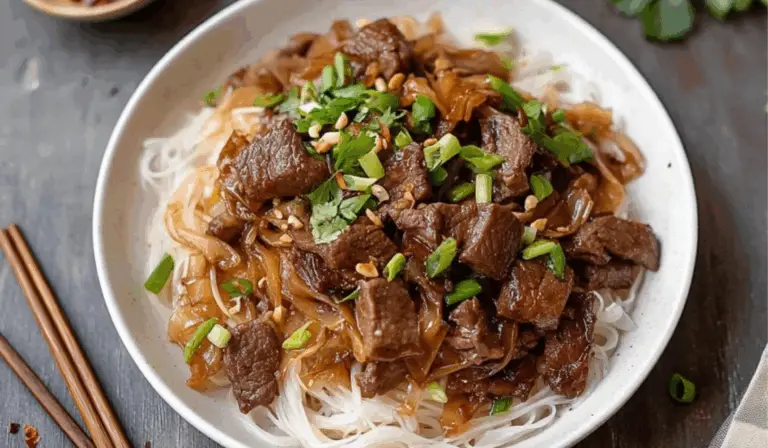
Sizzling Vietnamese Beef & Flat Rice Noodles (Hu Tiêu Áp Chảo)
Say hello to bold, street-food flavor at home! 🇻🇳🔥 This Sizzling Vietnamese Beef & Flat Rice Noodles (Hủ Tiếu Áp Chảo) is loaded with tender beef, chewy noodles, and a savory wok-kissed sauce 🍜🥩🍃. It’s smoky, satisfying, and surprisingly simple—even for beginners! One bite and you’ll feel the sizzle! 🔥💥
- Total Time: 45 minutes
- Yield: 4 servings 1x
Ingredients
A. Protein & Vegetables
- 12 oz beef sirloin or flank steak, sliced thin against the grain
- 1 bunch Chinese broccoli (gai lan) or broccolini, chopped
- 1 cup fresh bean sprouts
- ½ yellow onion, thinly sliced
- 2 green onions, cut into 2-inch sections
- 2 cloves garlic, minced
- 2 tbsp neutral oil (vegetable, canola, avocado)
B. Noodles
- 8 oz dried flat rice noodles (labeled “Hu Tieu” or “Banh Pho”)
- Warm water, for soaking
C. Beef Marinade
- 1 tbsp oyster sauce
- 1 tbsp light soy sauce
- 1 tsp sesame oil
- 1 tsp cornstarch
- ½ tsp sugar
- Ground black pepper, to taste
D. Stir-Fry Sauce
- 2 tbsp oyster sauce
- 1 tbsp light soy sauce
- 1 tbsp dark soy sauce (for color and depth)
- 1 tsp sugar
- 1 tsp fish sauce (optional)
- ¼ cup chicken broth or water
Instructions
1. Soak the Noodles
- Place rice noodles in a large bowl of warm water.
- Soak for 25–30 minutes until softened but still slightly firm.
- Drain and rinse under cold water. Toss lightly with oil to prevent sticking.
2. Marinate the Beef
- In a mixing bowl, combine sliced beef with all marinade ingredients.
- Mix well and let rest for 20–30 minutes while preparing other components.
3. Prepare the Sauce
- In a small bowl, mix oyster sauce, soy sauces, fish sauce (if using), sugar, and broth.
- Stir until smooth and set aside.
4. Blanch the Vegetables
- Boil water in a small pot.
- Add chopped Chinese broccoli and blanch for 1–2 minutes.
- Drain and rinse with cold water to stop cooking. Set aside.
5. Sear the Beef
- Heat 1 tbsp oil in a large skillet or wok over high heat.
- Add beef in a single layer and sear for 1–2 minutes per side.
- Cook in batches if needed to avoid overcrowding.
- Transfer to a plate once browned and cooked through.
6. Crisp the Noodles
- In the same pan, add 1 tbsp oil.
- Spread noodles evenly and press gently with a spatula.
- Let cook undisturbed for 2–3 minutes until slightly crispy on the bottom.
- Flip or stir gently to brown the other side lightly. Remove and set aside.
7. Cook the Aromatics
- Add garlic and sliced onions to the pan.
- Sauté for 30–45 seconds until fragrant.
- Add green onions and stir for another 30 seconds.
8. Combine and Stir-Fry
- Return beef and noodles to the pan.
- Add the blanched vegetables and pour in the sauce.
- Toss gently until everything is coated and heated through.
- Add bean sprouts at the end and stir lightly before removing from heat.
Notes
- Use a sharp knife: Slightly freezing the beef makes slicing thin pieces easier and cleaner.
- Cornstarch matters: It gives the beef a tender texture and helps it sear nicely.
- Don’t over-soak noodles: Over-soaked noodles will break apart during stir-frying. Check them frequently while soaking.
- Avoid stirring too much: Letting the noodles sit in the pan helps them develop crispy edges.
- Batch cooking: Cook beef and noodles in smaller portions to maintain high heat and avoid steaming.
- Keep ingredients nearby: Stir-frying goes fast. Prepare all ingredients ahead before you start.
- Prep Time: 30 minutes
- Cook Time: 15 minutes
Engagement Features
1. Fun Facts:
- Hu Tieu originated from the Teochew Chinese immigrants in southern Vietnam, bringing together Vietnamese and Chinese techniques.
- Ap Chao translates to “pressed against the pan,” which describes the pan-searing method used for the noodles.
2. Try This Twist:
- Chicken Version: Use boneless chicken thigh slices and follow the same marinade and cooking method.
- Vegetarian Option: Substitute beef with pan-fried tofu or seitan, and use mushroom oyster sauce.
- Add More Veggies: Toss in mushrooms, snow peas, or red bell pepper for a more colorful plate.
3. Make it Spicy:
- Add chili oil to the stir-fry sauce.
- Top with fresh Thai chili slices.
- Serve with Vietnamese satay chili paste on the side.
4. Reader Challenge:
Try pan-frying half the noodles until crispy, and keep the other half soft. Then mix them together and decide which texture you like more. It’s a great way to explore contrast in the dish.
5. Feedback Prompt:
What kind of proteins or vegetables would you like to see added to this noodle stir-fry? Share your variations and ideas—you might discover a new favorite.
Conclusion
This beef version of Hu Tieu Ap Chao keeps the essence of the original dish while making it more accessible to those avoiding pork. It’s flavorful, satisfying, and adaptable for different taste preferences. With its crisp-tender noodles, fragrant sauce, and juicy slices of marinated beef, this Vietnamese stir-fry stands out as a well-balanced and crave-worthy meal.
From weekday dinners to special weekend meals, this dish is a guaranteed hit. With practice, you’ll master the timing and textures, making it a staple in your cooking routine.