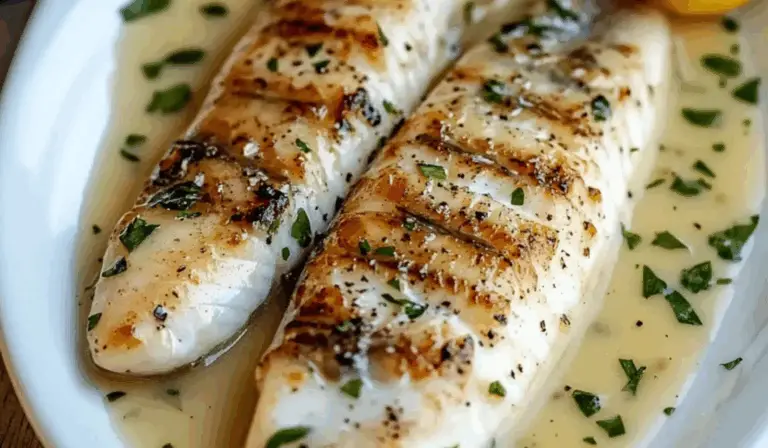
Ingredients
Scale
For the Fish:
- 4 white fish fillets (around 150g or 5oz each), boneless and skinless
- 1/2 teaspoon salt
- 1/4 teaspoon freshly ground black pepper
- 2 tablespoons extra virgin olive oil
For the White Wine Sauce:
- 1 small eschalot, finely chopped (about 1 1/2 tablespoons)
- 1 1/4 cups dry white wine (like Chardonnay or Sauvignon Blanc)
- 1 teaspoon lemon juice
- 1 teaspoon white wine vinegar (optional, you can substitute with more lemon juice)
- 1/8 teaspoon salt
- A pinch of ground black pepper
- A pinch of sugar
- 1 cup thickened cream or heavy cream
- 30g unsalted butter, cold and diced into cubes
- 2 teaspoons finely chopped parsley (optional, for garnish)
Preparation Notes:
- Choose a firm white fish such as cod, tilapia, haddock, or snapper.
- Use a dry white wine for a richer flavor. Avoid overly sweet wines.
- Fresh eschalots add depth, but finely chopped white or yellow onions can be used as substitutes.
- Chill the butter before use for the best emulsification into the sauce.
- Prepare all ingredients before starting to cook to maintain flow and timing.
Instructions
- Season the Fish
- Pat the fish fillets dry with a paper towel.
- Sprinkle each side with salt and pepper. Set aside while heating the pan.
- Sear the Fish
- Heat the olive oil in a non-stick skillet over medium-high heat.
- Place the fillets in the pan and sear for 2–3 minutes on one side until golden.
- Carefully flip and cook for another 2–3 minutes on the other side until the fish is cooked through and flakes easily with a fork.
- Transfer to a plate and cover loosely with foil to keep warm.
- Start the Sauce Base
- Reduce heat to medium. Add a small splash of oil if needed.
- Add the finely chopped eschalot and sauté for 1–2 minutes until translucent and fragrant.
- Pour in the white wine, lemon juice, and white wine vinegar. Stir briefly.
- Simmer the Sauce
- Allow the wine mixture to come to a simmer and cook for about 10–12 minutes.
- The liquid should reduce by at least half and become slightly syrupy.
- Stir occasionally and adjust heat as necessary to maintain a gentle simmer.
- Add Cream and Seasonings
- Pour in the cream and stir well to combine.
- Add a pinch of salt, pepper, and sugar.
- Continue to simmer for another 4–5 minutes until the sauce thickens slightly.
- Incorporate Butter
- Reduce the heat to low.
- Add the cold butter cubes one at a time, whisking continuously to incorporate each piece before adding the next.
- This will create a smooth, glossy finish and enrich the sauce’s flavor.
- Taste and Adjust
- Taste the sauce and adjust seasoning with more salt or lemon juice if needed.
- If the sauce is too thick, add a splash of wine or water to loosen it slightly.
- Plate and Serve
- Place the fish fillets on warm plates.
- Spoon the white wine sauce generously over each portion.
- Garnish with chopped parsley if desired.
- Serve immediately while hot.
Notes
- Choosing the Right Fish:
Look for white fish that holds its shape well during cooking. Freshness is key—firm texture and mild aroma are good indicators. - Don’t Overcook the Fish:
Fish cooks quickly. As soon as it turns opaque and flakes with a fork, it’s done. Overcooking makes it dry and tough. - Using Wine in Cooking:
Always use a wine you’d enjoy drinking. Low-quality wine can ruin the flavor of the sauce. If avoiding alcohol, use a mixture of chicken broth and lemon juice. - Sauce Consistency:
The sauce should coat the back of a spoon. If it’s too thin, simmer longer. If too thick, add more wine or cream. - Avoid High Heat After Adding Cream:
High heat can cause the cream to separate. Keep the heat low once the cream is added. - Balancing the Flavor:
The touch of sugar helps round out the acidity of the wine and lemon. Taste as you go to achieve the right balance. - Prepare Ahead:
You can prepare the sauce in advance and reheat gently before serving. Add the butter just before serving for the best texture.
- Prep Time: 10 minutes
- Cook Time: 20 minutes