Ingredients
1. Green Cabbage – The Heart of the Dish
The key ingredient in this recipe is cabbage, which serves as the main vegetable. You’ll need about 8 cups of finely sliced cabbage, which is roughly 1 small cabbage or half of a large one. Cabbage brings a mild, slightly sweet flavor and a satisfying crunch that contrasts nicely with the soft rice. As the cabbage cooks, it wilts down significantly, losing its volume but intensifying its flavor.
You can use either regular green cabbage or opt for napa cabbage for a slightly milder, more delicate flavor. If you prefer a little more texture, feel free to leave the cabbage slices thicker.
2. Carrot – A Touch of Sweetness and Color
Carrot adds not only a pop of vibrant color but also a natural sweetness that balances the savory soy sauce. Grated or finely shredded carrot incorporates seamlessly into the dish, offering a tender texture that complements the cabbage and rice. It’s a great way to sneak in some extra nutrients while keeping the dish light and fresh.
3. Onion – Essential Aromatics for Depth of Flavor
A medium-sized onion, finely diced, provides a savory base for the fried rice. The onion’s natural sugars caramelize as it cooks, adding a subtle sweetness that enhances the overall flavor profile. It also contributes to the fragrant aroma of the dish as it sautés with the cabbage and carrot.
4. Jasmine Rice – Fragrant and Fluffy
Jasmine rice is the best choice for this dish due to its light and fluffy texture and fragrant aroma. Its subtle floral notes pair wonderfully with the savory seasonings. The key to perfect fried rice is using day-old rice or leftover rice, as it’s drier and less sticky, making it easier to toss and stir-fry without clumping together. If you don’t have leftover rice, you can cook fresh rice, but make sure to let it cool completely before using it in this dish.
5. Soy Sauce – Salty Umami
Soy sauce brings the savory umami flavor to the dish, giving the rice its depth and richness. It also helps to season the vegetables and rice, making them come together in perfect harmony. You can use regular soy sauce or low-sodium soy sauce depending on your preference. The saltiness can be adjusted according to your taste, so feel free to start with less and add more as needed.
6. Sesame Oil – Fragrant and Nutty
Sesame oil is a key ingredient in many Asian dishes, providing a distinct, nutty aroma and flavor that’s both comforting and authentic. Just a teaspoon of sesame oil infuses the rice with a warm, toasty scent, elevating the entire dish. It’s an essential ingredient that brings the dish to life and gives it that authentic Asian fried rice taste.
7. Butter – Richness and Flavor
The addition of butter in this recipe helps to create a rich and creamy texture for the rice, making it more indulgent and comforting. The butter also helps to brown the vegetables and rice slightly as they sauté, adding extra flavor and depth to the dish.
8. Salt and Pepper – The Final Seasonings
Salt and pepper are essential for bringing all the flavors together. While soy sauce provides saltiness, a pinch of salt helps to round out the dish and enhance its overall taste. Freshly ground black pepper adds a mild heat and a touch of spice, balancing the sweetness of the cabbage and carrot. Adjust the seasoning according to your personal preference.
Instructions
Step 1: Cook the Rice
Start by rinsing 1 cup of rice under cold water until the water runs clear. This step helps to remove excess starch, preventing the rice from becoming too sticky. Drain the rice well and cook it according to the package instructions. If you have a rice cooker, you can use it to cook the rice; just add 1 tablespoon of butter and 1/2 teaspoon of salt to the water for added flavor.
Once the rice is cooked, set it aside to cool. If you’re using leftover rice, simply fluff it with a fork to break up any clumps before proceeding to the next step.
Step 2: Prepare the Vegetables
While the rice is cooking, you can prepare the vegetables. Finely slice the cabbage, ensuring that the pieces are uniform in size so they cook evenly. A mandolin slicer works best for quickly slicing the cabbage, but a sharp knife will do the job just fine.
Grate the carrot and finely dice the onion. Having all the vegetables ready will make the cooking process go quickly.
Step 3: Sauté the Vegetables
Heat a large, heavy-bottomed skillet or wok over high heat. Once the pan is hot, add 2 tablespoons of cooking oil and let it heat up. Toss in the sliced cabbage, grated carrot, and diced onion, and sauté over very high heat for 7 to 10 minutes. Stir constantly to prevent the vegetables from sticking to the bottom of the pan and burning.
As the vegetables cook, they will wilt down to about one-third of their original size. The cabbage will turn golden around the edges, and the onions will soften, adding a wonderful aroma to the kitchen.
Step 4: Add Butter and Rice
Once the vegetables are cooked, add 2 tablespoons of butter to the pan and let it melt. This adds richness and flavor to the dish. Next, add 3 cups of cooked rice to the pan. Use a spatula or wooden spoon to break up any clumps of rice and stir it in with the vegetables.
Step 5: Season the Rice
Now it’s time to add the seasoning. Drizzle 2 tablespoons of soy sauce and 1 teaspoon of sesame oil over the rice and vegetables. Stir everything together to ensure that the rice is evenly coated with the sauce. Taste the rice and adjust the seasoning as needed, adding salt and pepper to your liking. If you like it more savory, feel free to add a bit more soy sauce.
Step 6: Serve and Enjoy
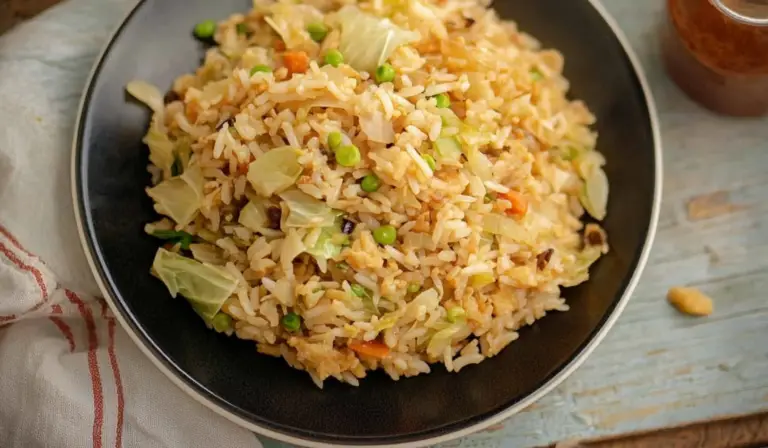
Once everything is well-mixed and heated through, your Cabbage Fried Rice is ready to serve! You can enjoy it as a stand-alone dish or pair it with grilled chicken, shrimp, or tofu for a complete meal.
Notes
1. Add Protein
For a more substantial meal, consider adding protein to your fried rice. Chicken, shrimp, beef, or tofu are great options. You can stir-fry the protein with the vegetables or cook it separately and add it in at the end.
2. Use Different Vegetables
Feel free to experiment with other vegetables! Peas, bell peppers, corn, or mushrooms would make excellent additions to this dish. Simply sauté them with the cabbage, onion, and carrot for a more colorful and nutrient-packed fried rice.
3. Spice It Up
If you like a little heat, try adding some chili flakes, sriracha, or fresh sliced chili peppers to the dish. The spice will complement the savory flavors and add an exciting kick to the rice.
4. Make It Vegan
For a vegan version, simply omit the butter and use plant-based alternatives. You can also replace the soy sauce with tamari to make the dish gluten-free.
5. Substitute the Rice
While jasmine rice is the recommended choice for this recipe, you can experiment with other types of rice, such as brown rice, basmati, or even cauliflower rice for a lower-carb option.
- Prep Time: 10 minutes
- Cook Time: 15 minutes